Tooth KnowLedge
Do coffee and tea discolor teeth?
14 mins Read
Last Updated :Advertisement
What Do the Stains Actually Look Like?
When people talk about coffee or tea stains, they usually just say “yellow teeth”—but it’s not that simple. The type of stain you get depends on which drink you’re drinking, how often you drink it, and your own tooth enamel.
1. Coffee Stains: Dull Yellow or Brown
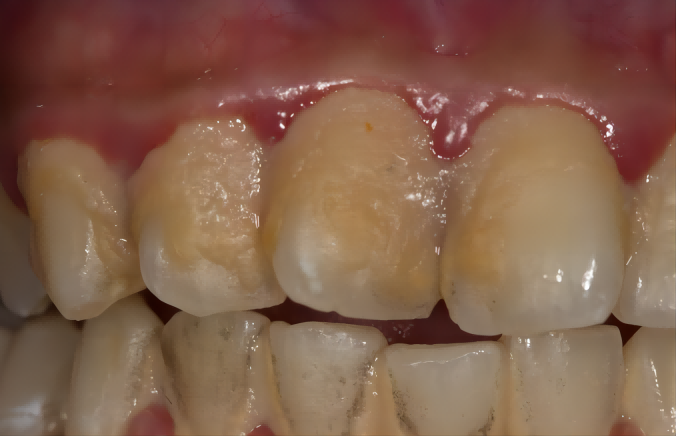
Coffee stains are usually a dull, muted yellow or light brown. They start out as a slight dullness on the surface of your teeth—you might notice that your teeth don’t look as bright as they used to, especially when you smile. Over time, if you drink coffee regularly without cleaning your teeth properly, the stains can get darker, turning into a deeper brown. These stains tend to be more noticeable on the front teeth, since those are the ones most exposed when you drink.
One thing I’ve noticed: coffee stains are usually more uniform than tea stains. They cover the entire surface of the tooth, making your whole smile look a little dull. And if you drink black coffee, the stains are more noticeable than if you drink coffee with milk—remember, milk binds to tannins and reduces staining.
2. Tea Stains: Yellow or Orange-Tinted
Tea stains (especially from black tea) are often a brighter yellow or even orange-tinted. They can be more spotty than coffee stains, clinging to the crevices between your teeth and along the gum line. Green tea and white tea stains are usually lighter—more of a pale yellow—and less noticeable, but they can still build up over time.
I have a friend who drinks 3 cups of black tea every day, and she noticed that her front teeth had a slight orange tinge after a few months. She thought it was just her imagination until she went to the dentist, who told her it was tea stains. The good news? A professional cleaning got rid of most of it, and she started using a few simple tricks to prevent it from coming back.
3. The “Cumulative” Effect
The worst part about coffee and tea stains is that they’re cumulative. You won’t notice a difference after one cup, or even one week. But after a month, six months, or a year of daily drinking, you’ll start to see a change. It’s like wearing a white shirt every day—you won’t notice the stains right away, but over time, they build up and become hard to ignore.
But here’s the silver lining: these stains are almost always extrinsic, meaning they’re on the surface (or just below the surface) of the enamel. That means they can be removed with proper cleaning, either at home or at the dentist. We’ll get to that in a bit—but first, let’s debunk some common myths about coffee, tea, and teeth staining.
Myth Busting: What People Get Wrong About Coffee,
There’s so much misinformation out there about coffee, tea, and teeth staining. Let’s tackle the most common myths I hear—because misinformation only adds to the stress. These are all totally false, and I’m here to set the record straight.
Myth #1: If You Brush After Drinking CoffeeTea, Stains Won’t Happen
Nope! In fact, brushing right after drinking coffee or tea can actually make the problem worse. Remember how we talked about the acidity in these drinks? The acid weakens your enamel for about 30 minutes after you drink. If you brush during that time, you’re scrubbing away the weakened enamel, making it more porous and more prone to staining. It’s like scrubbing a wet sponge—you’re damaging the surface, so it soaks up more liquid (or in this case, tannins).
The better move? Rinse your mouth with water right after drinking to wash away the tannins and acid. Then wait 30 minutes to brush. That way, your enamel has time to re-harden, and you’re not scrubbing away the protective layer.
Myth #2: Adding Milk or Cream Makes Staining Worse
The opposite is true! Adding milk, cream, or even oat milk to your coffee or tea can help reduce staining. As I mentioned earlier, the casein in milk binds to the tannins, preventing them from sticking to your teeth. So a latte, cappuccino, or tea with milk is better for your teeth than a black coffee or black tea. Just avoid adding too much sugar—remember, sugar feeds bacteria and weakens enamel over time.
Myth #3: Light Roast Coffee Stains Less Than Dark Roast
This one is partially true, but not for the reason you think. Light roast coffee has slightly fewer tannins than dark roast, so it can stain less—but only if you drink it the same way. If you drink light roast coffee stronger (more grounds, less water) or more often than dark roast, it can still cause just as much staining. The key is the concentration of tannins, not just the roast level.
Myth #4: Tea Is “Healthier” for Your Teeth Than Coffee
Tea does have some benefits for your teeth—green tea, in particular, has antioxidants that can help fight bacteria. But when it comes to staining, tea (especially black tea) is just as bad as coffee, if not worse. And both drinks are acidic, so they both weaken enamel over time. There’s no “winner” here—both can stain, and both require the same level of care.
Myth #5: Whitening Toothpaste Will Get Rid of All Stains
Whitening toothpaste can help with surface-level stains, but it won’t get rid of deep, built-up stains from years of coffee or tea drinking. Most whitening toothpastes work by using mild abrasives to scrub away surface stains, but they can’t reach the tannins that have seeped into the enamel pores. They’re great for maintenance, but if you have noticeable stains, you’ll need something stronger (like a professional cleaning or at-home whitening kits).
Advertisement
Advertisement
Tips For Getting Free Dental Work
1. Be prepared to provide documentation of your income and place of residence.
Many free dental clinics require patients to provide proof of income and residence in order to qualify for services.
2. Call ahead to schedule an appointment.
Most free dental clinics require patients to make an appointment in advance.