Dental Implant
Dental Implants vs. Traditional Dentures
12mins Read
Last Updated :Advertisement
Service life and durability
In the field of tooth restoration, service life and durability are important indicators to measure the quality of tooth restoration methods. There are significant differences between dental implants and traditional dentures in this regard.
1. Service life and durability of traditional dentures
Removable dentures
Service life: The service life of removable dentures is usually around 5-10 years. Over time, the material of the denture may age and wear, resulting in a shortened service life.
Durability: The material of removable dentures is relatively soft, easy to wear and deform, especially when chewing hard food, the durability is poor.
Fixed dentures
Service life: The service life of fixed dentures is relatively long, generally around 10-15 years. However, due to factors such as material and care, the service life may vary.
Durability: Fixed dentures use hard materials such as porcelain and metal, and have good durability. However, during long-term use, problems such as porcelain shedding and metal corrosion may still occur.
2. Service life and durability of dental implants
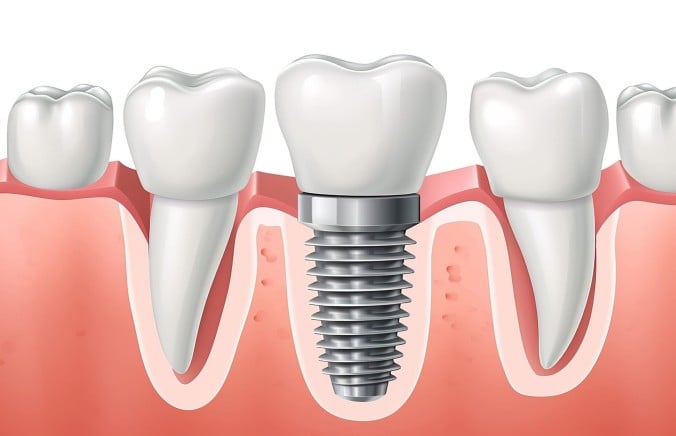
Service life: The service life of dental implants is usually more than 20 years, and can even be used for life. This is because the artificial root of dental implants is closely integrated with the jawbone and has strong stability.
Durability: The high-strength titanium alloy material used in dental implants has excellent corrosion resistance, wear resistance and impact resistance, so that it can still maintain good performance during long-term use.
3. Reasons for the difference in service life and durability
Structural design: The artificial root of dental implants simulates the structure of natural teeth, so that it can better disperse force and reduce wear when chewing.
Material: The titanium alloy material used in dental implants has excellent biocompatibility and mechanical properties, which ensures its long-term durability.
Fixation method: Dental implants achieve a fixation method similar to natural teeth through the combination of artificial roots and jaws, which increases the service life.
4. The impact of service life and durability on patients
Economic benefits: Tooth restoration methods with long service life can reduce the economic burden of patients due to replacement of dentures.
Quality of life: Durable tooth restoration methods can allow patients to avoid frequent visits and replacement of dentures, and improve the quality of life.
Oral health: Durable tooth restoration methods help maintain oral health and reduce the occurrence of oral diseases.
The difference between dental implants and traditional dentures in terms of service life and durability makes dental implants have obvious advantages in many aspects. The following is a brief summary of the two:
Dental implants: long service life, good durability, reduce the number of times patients change dentures, and reduce the long-term economic burden.
Traditional dentures: relatively short service life, poor durability, patients may need to change dentures frequently, increasing economic and time costs.
Advertisement
Advertisement
Tips For Getting Free Dental Work
1. Be prepared to provide documentation of your income and place of residence.
Many free dental clinics require patients to provide proof of income and residence in order to qualify for services.
2. Call ahead to schedule an appointment.
Most free dental clinics require patients to make an appointment in advance.