Tooth KnowLedge
Is there a relationship between dental implants and osteoporosis?
15mins Read
Last Updated :Advertisement
Osteoporosis Medications and Implant Risks
For patients with osteoporosis who are taking medications to manage their condition, the relationship between implants and osteoporosis becomes even more complex. The two most common classes of osteoporosis medications—bisphosphonates (e.g., alendronate, zoledronic acid) and RANK-ligand inhibitors (e.g., denosumab)—work by slowing bone resorption, which can affect the osseointegration process. Additionally, these medications carry a small risk of medication-related osteonecrosis of the jaw (MRONJ), a rare but serious condition where the jawbone becomes necrotic (dies) after dental procedures, including implant placement.
MRONJ is most commonly associated with high-dose intravenous bisphosphonates used to treat cancer, but it can also occur in patients taking oral bisphosphonates or denosumab for osteoporosis, though the risk is much lower (0.1–0.2% for osteoporosis patients, compared to up to 5% for cancer patients). According to guidelines from the Dana-Farber Cancer Institute, the risk of MRONJ increases with the duration of medication use, with the highest risk in patients who have taken bisphosphonates for more than 5 years. However, this risk should not deter patients from pursuing implant treatment; instead, it requires careful planning and coordination between the patient’s dentist and physician.
In most cases, dentists will work with the patient’s physician to determine whether to temporarily stop (pause) osteoporosis medications before implant surgery—a process called “drug holiday.” For patients taking oral bisphosphonates, a drug holiday of 3–6 months is often recommended to allow the medication to clear the body, reducing the risk of MRONJ and improving osseointegration. For patients taking denosumab, which has a shorter half-life, a drug holiday of 1–2 months may be sufficient. After surgery, the medication can be resumed once the implant has achieved stable osseointegration. It’s important to note that a drug holiday should only be done under the supervision of a physician, as stopping osteoporosis medications can temporarily increase the risk of fractures.
Treatment Considerations: How Dentists Adapt Implant Care for Osteoporotic Patients
For dental professionals, treating osteoporotic patients requires a personalized approach that addresses the unique challenges of reduced bone density. The first step is a comprehensive evaluation to assess the patient’s bone health, medical history, and medication use. This evaluation typically includes a cone beam computed tomography (CBCT) scan, which provides a detailed 3D image of the jawbone, allowing the dentist to measure bone density, volume, and structure with precision. The dentist will also review the patient’s bone density test results (e.g., DXA scan) and consult with the patient’s physician to discuss osteoporosis management and medication adjustments.
One of the most common adaptations is the use of bone augmentation techniques to enhance the jawbone’s quantity and quality. Bone grafting, for example, involves adding bone tissue (either from the patient’s own body, a donor, or a synthetic material) to the implant site to increase bone volume and density. A 2022 case report demonstrated the success of this approach, where a patient with focal osteoporotic bone marrow defects received a bone graft using cerabone® granules before implant placement, resulting in stable osseointegration and long-term implant success. Other techniques include sinus lift procedures (to add bone to the upper jaw) and guided bone regeneration (to protect and stimulate new bone growth around the implant).
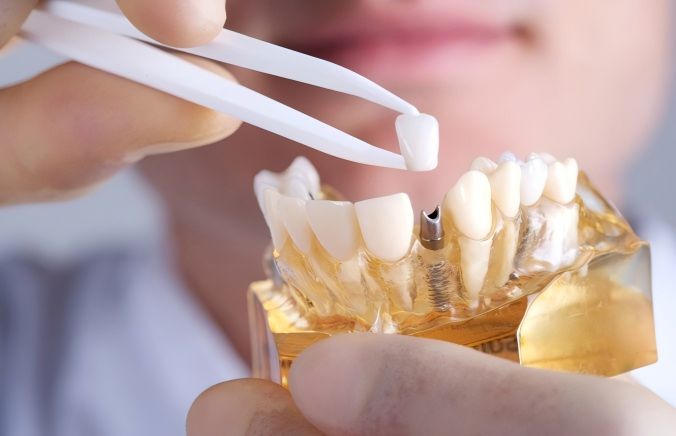
Dentists may also choose specialized implant designs to improve stability in low-density bone. Titanium-zirconium implants, which are stronger and more biocompatible than traditional titanium implants, have been shown to improve osseointegration in osteoporotic patients. Implants with a hydrophilic surface, which attracts bone-forming cells, can also accelerate healing and improve stability. Additionally, dentists may use a “non-functional loading” protocol, where a temporary prosthesis is placed without occlusal (chewing) pressure during the healing period, reducing stress on the implant and allowing the bone to fuse more effectively. This is particularly important for osteoporotic patients, as excessive stress during healing can lead to implant failure.
Advertisement
Advertisement
Tips For Getting Free Dental Work
1. Be prepared to provide documentation of your income and place of residence.
Many free dental clinics require patients to provide proof of income and residence in order to qualify for services.
2. Call ahead to schedule an appointment.
Most free dental clinics require patients to make an appointment in advance.