Oral health
Does One Xylitol a Day Really Help Reduce Your Risk of Cavities?
15mins Read
Last Updated :Advertisement
IV. Are Xylitol Toothpaste and Mouthwash Necessary
Many toothpastes and mouthwashes now contain xylitol.
To be honest, they aren’t “essential,” but they do offer added benefits. If you already have a consistent routine of brushing and using mouthwash, choosing xylitol-containing versions can indeed enhance the effectiveness of your oral care routine. However, there’s no need to switch all your products just for this reason.
Benefits of xylitol toothpaste:
Helps inhibit oral bacteria
Works better when combined with brushing
Especially child-friendly (some people find this more reassuring)
Regarding mouthwash:
It can serve as a supplement to post-meal cleaning
It also helps improve bad breath to some extent
But it cannot replace brushing
So basic oral hygiene is the core; xylitol is a supplementary bonus
If your budget is limited, it’s actually sufficient to prioritize basic tools like a toothbrush, toothpaste, and dental floss.
V. Can children use xylitol?
Yes, and many dentists actually recommend it.
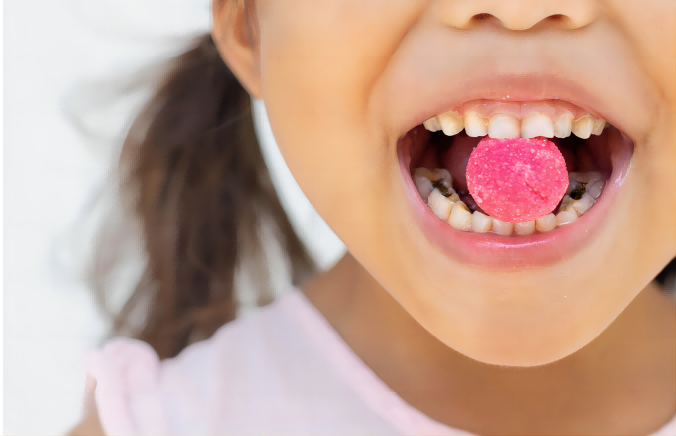
Especially for children prone to cavities, xylitol can serve as an additional protective measure. This “extra protection” is particularly meaningful when children haven’t yet fully developed good brushing habits.
Suitable options for children:
Xylitol gum (for children old enough to chew)
Xylitol lozenges or candies (use with caution)
However, parents should remember one thing:
Xylitol is a supplement, not a “miracle cure” for tooth decay.
Brushing habits are the key. If a child consumes xylitol but doesn’t brush their teeth, the effect is actually quite limited. Additionally, be sure to control intake to avoid discomfort from consuming too much at once.
VI. Xylitol is not a panacea—this is crucial to un
Many people tend to go to extremes when they hear “cavity prevention,” such as:
“If I only eat xylitol from now on, I won’t get cavities, right?”
“Can I stop brushing my teeth?”
The answer is: No.
Xylitol merely reduces the risk; it cannot completely prevent cavities. Oral health is a “systemic effort” that cannot be solved by relying on a single product.
The truly effective combination for dental care should be:
Brushing thoroughly morning and night
Using dental floss
Limiting sugar intake
Regular dental cleanings and checkups
Xylitol as a supplement
This is what constitutes “comprehensive protection.” If you only do one of these, the effectiveness will be compromised.
VII. Who is particularly suited to using xylitol?
If you fall into any of the following categories, you may want to give it special consideration:
People prone to cavities
Those who frequently snack on sweets or sugary foods
People with dry mouth (low saliva production)
People wearing braces (difficult to clean)
Children (especially those who love sweets)
For these individuals, xylitol often yields more noticeable results. Since they are inherently “high-risk groups,” even a small addition to their routine can lead to significant improvements.
This is especially true for those wearing braces, as many areas are difficult to reach with a toothbrush; using xylitol gum is actually a very practical supplementary measure.
Advertisement
Advertisement
Tips For Getting Free Dental Work
1. Be prepared to provide documentation of your income and place of residence.
Many free dental clinics require patients to provide proof of income and residence in order to qualify for services.
2. Call ahead to schedule an appointment.
Most free dental clinics require patients to make an appointment in advance.