Tooth KnowLedge
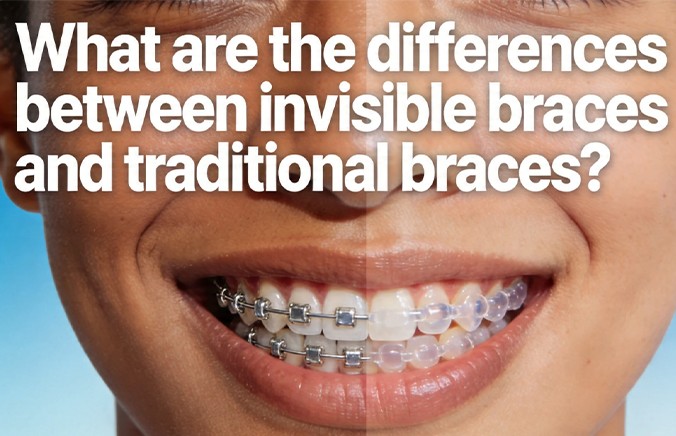
What are the differences between invisible braces and traditional braces?
16mins Read
Last Updated :Advertisement
Comfort and Discomfort: A Day-to-Day Difference
Comfort is another key difference between invisible and traditional braces, as it affects your daily life throughout the treatment period. Traditional braces can be quite uncomfortable, especially in the first few weeks after getting them or after adjustments. The metal brackets and wires can rub against the inside of your cheeks and lips, causing irritation, soreness, and even small ulcers—studies show that over half of traditional brace wearers experience mouth ulcers in the first month, often requiring orthodontic wax for relief. The wire adjustments, which are done every 4–6 weeks, can also cause temporary tooth pain or sensitivity, as the pressure on the teeth increases to encourage movement. Additionally, the brackets can make it difficult to close your mouth fully or speak naturally at first, though most people adjust within a few weeks.
Invisible braces are generally much more comfortable. The smooth, plastic aligners have no sharp edges, so they don’t rub against the cheeks or lips, reducing the risk of irritation and ulcers. Brands like Invisalign use SmartTrack® material, which is flexible and lightweight, further enhancing comfort. While you may still feel some pressure or soreness when switching to a new set of aligners (which happens every 1–2 weeks), the discomfort is typically milder and shorter-lived than with traditional braces. The aligners are also removable, which means you can take them out if you’re experiencing significant discomfort, though this should be done sparingly to avoid delaying treatment. Many patients report that they forget they’re wearing invisible braces after just a few days of use, thanks to their lightweight, low-profile design. Patient satisfaction surveys show that 70% of invisible brace wearers are happy with the comfort level, compared to just 30% of traditional brace users.
Lingual braces, while invisible from the front, can cause more discomfort than both front-facing traditional braces and invisible aligners, as they sit on the tongue side of the teeth and can irritate the tongue, leading to speech difficulties and increased salivation. This makes invisible aligners the most comfortable option for most patients.
Convenience and Lifestyle Impact: How They Fit Into Your Routine
The convenience of each treatment option is a major consideration for busy adults and teens. Traditional braces are fixed—they cannot be removed, which means they are always working to straighten your teeth, but it also means they impact your daily routine in several ways. Eating can be a challenge, as you need to avoid hard, sticky, or chewy foods (such as nuts, hard candy, gum, or popcorn) that can break the brackets or bend the wire. If a bracket breaks or a wire comes loose, you’ll need to schedule an emergency appointment with your orthodontist to get it fixed, which can be time-consuming. Studies show that 25% of traditional brace wearers experience bracket loss at some point, requiring additional repairs and potential treatment delays.
Oral hygiene is also more difficult with traditional braces. Food particles and plaque can easily get trapped between the brackets and wires, making it hard to brush and floss effectively. You’ll need to use special tools, such as a floss threader or interdental brush, to clean between the teeth and around the brackets, which takes more time and effort. If you don’t clean properly, you risk developing tooth decay, gum disease, or white spots on the teeth (from demineralization). This is a significant concern, as traditional braces have a higher complication rate (around 10%) compared to invisible braces (5%) due to hygiene challenges.
Invisible braces are far more convenient for most lifestyles. Since they are removable, you can take them out to eat, drink (except water), brush, and floss. This means you can eat all your favorite foods without restrictions—no more avoiding hard or sticky snacks. Brushing and flossing are also much easier, as you can remove the aligners and clean your teeth normally, reducing the risk of tooth decay and gum disease. Additionally, invisible braces require fewer orthodontist visits—most patients only need to see their orthodontist every 6–8 weeks for a check-up, compared to every 4–6 weeks for traditional braces. This is because the aligners are pre-made, and adjustments are built into each new set of aligners. Some brands, like ClearCorrect, even offer remote follow-up options, making them ideal for busy professionals or those living in remote areas.
However, invisible braces require a high level of self-discipline. To be effective, they must be worn for 20–22 hours per day. If you skip wearing them for extended periods, your treatment will be delayed, and you may need to start over or wear the aligners for a longer period. This makes them a poor choice for people who are forgetful or lack self-discipline, such as young children or teens who may be tempted to remove them for social events. Traditional braces, being fixed, require no self-discipline—they work 247, making them ideal for younger patients or anyone who struggles with consistency.
Advertisement
Advertisement
Tips For Getting Free Dental Work
1. Be prepared to provide documentation of your income and place of residence.
Many free dental clinics require patients to provide proof of income and residence in order to qualify for services.
2. Call ahead to schedule an appointment.
Most free dental clinics require patients to make an appointment in advance.