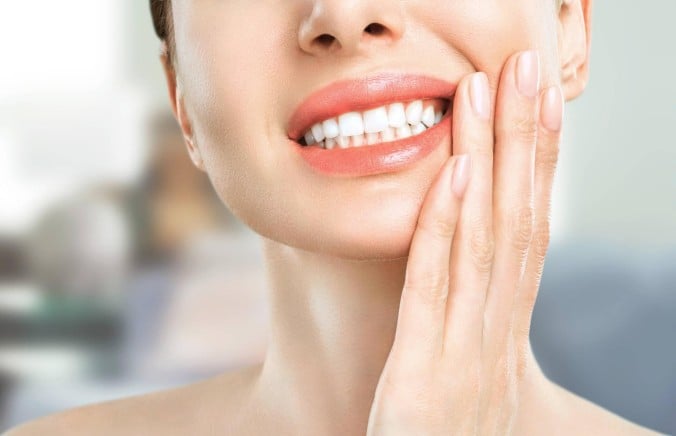
Dental Implant
Missing teeth accelerate facial aging; choose dental implants to lock in a youthful appearance.
20mins Read
Last Updated :Advertisement
A stark contrast: Traditional restoration methods fail to halt the aging process
Many people choose removable dentures or porcelain veneers when faced with missing teeth. However, these methods only address the symptoms, failing to prevent facial aging at its root and potentially even accelerating it. Removable dentures, fixed by a base and clasps, not only cause a noticeable foreign body sensation and have extremely low chewing efficiency, limiting them to soft foods, but also fail to provide effective stimulation to the alveolar bone, leading to continued alveolar bone atrophy. Furthermore, long-term wear compresses the gums, accelerating gum recession and exacerbating facial hollowing, potentially causing speech impediments, loose dentures, and other embarrassing issues, ultimately lowering one's appearance and overall image. Porcelain veneers, on the other hand, require grinding down the tooth structure of two adjacent healthy teeth to build a bridge. While offering slightly better chewing function than removable dentures, they still cannot address alveolar bone atrophy. Moreover, grinding down healthy teeth damages the original tooth structure, potentially leading to loosening and loss of adjacent teeth in the long run, creating a vicious cycle of "the more you repair, the worse it gets," further accelerating facial aging and failing to achieve the goal of "locking in youth."
Core Solution: Dental Implants – More Than Just Filling Teeth, They Fight Aging
Dental implants have become the "golden choice" for tooth replacement because they replicate the "root-crown" structure of natural teeth, achieving "biomimetic restoration." This not only restores chewing function but also fundamentally prevents alveolar bone atrophy, maintaining a youthful facial appearance. The core of dental implants involves inserting a titanium alloy artificial tooth root (implant) into the alveolar bone. After a 3-6 month "osseointegration" period, the artificial root fuses tightly with the alveolar bone, firmly "rooted" in the bone like a natural tooth root. It continuously provides chewing stimulation to the alveolar bone, effectively preventing alveolar bone resorption and maintaining its height and density. This provides fundamental support for the facial contours, preventing aging issues such as sunken cheeks and drooping corners of the mouth. Meanwhile, dental implant crowns are customized according to the color, shape, and size of adjacent teeth, making them virtually indistinguishable from natural teeth. They integrate perfectly into the dental arch, resulting in a more natural smile and visually enhancing facial refinement. Furthermore, they do not rely on adjacent teeth for support, do not damage healthy teeth, and offer 80%-95% of the chewing efficiency of natural teeth, easily handling various foods. This restores normal oral function while simultaneously providing ample exercise for facial muscles, maintaining a firm and defined jawline, truly achieving the dual effect of "tooth restoration + anti-aging."
Cognitive Upgrade: Dental Implants – An Anti-Aging Option Suitable for All People with Missing Teeth
Many people have misconceptions about dental implants, believing that "dental implants are expensive," "the surgery is painful," and "the elderly cannot have them." However, these misconceptions are being dispelled by an increasing number of clinical cases. In fact, the pain level of dental implants is far lower than traditional tooth extraction. The surgery is performed under local anesthesia, and a single implant only takes 30-60 minutes. Post-operative reactions are mild, recovery is rapid, and soft foods can be consumed on the same day. Moreover, dental implants are suitable for a wide range of people. Whether it's a single tooth, multiple teeth, or complete edentulism, as long as the patient is in good overall health and their alveolar bone condition meets the requirements (even if bone volume is insufficient, it can be improved through bone grafting), both young people and seniors over 80 years old can undergo dental implant restoration. Aunt Tan, 80 years old, has maintained her 32 teeth perfectly intact through consistent dental care. Many elderly people of her age, after having their missing teeth restored through dental implants, not only regained their chewing function but also experienced a fuller, firmer face, making them look significantly younger than before. Although the cost of a single dental implant procedure is slightly higher than traditional restorations, its lifespan can reach 20-30 years, or even longer. With proper maintenance, it can last a lifetime, making the average annual cost lower—a highly cost-effective "anti-aging investment."
Time waits for no one, but we can actively combat the signs of aging. Tooth loss is not an inevitable part of aging but rather a preventable "artificial acceleration." Rather than letting tooth loss steal your appearance and youth, choose dental implants to rebuild oral health and maintain a firm and full facial contour. A set of straight and healthy teeth is not only a guarantee for chewing, but also a symbol of youthfulness. Choosing dental implants not only restores missing teeth, but also restores lost youthful radiance, allowing you to maintain a firm profile and a confident smile as time goes by, gently fighting against aging.
Advertisement
Advertisement
Tips For Getting Free Dental Work
1. Be prepared to provide documentation of your income and place of residence.
Many free dental clinics require patients to provide proof of income and residence in order to qualify for services.
2. Call ahead to schedule an appointment.
Most free dental clinics require patients to make an appointment in advance.